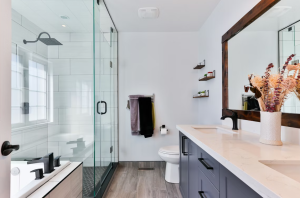

Meta Description: Transform your master bathroom with expert dual vanity organization strategies. Complete guide with storage solutions, division tips, and maintenance routines for couples.
Reading Time: 12 minutes | Difficulty: Beginner to Intermediate | Last Updated: April 2026
Introduction: Why Dual Vanity Organization Matters for Couples
A disorganized dual vanity can turn your master bathroom from a peaceful retreat into a source of daily conflict. When two people share bathroom space, poor organization leads to misplaced items, morning routine delays, and unnecessary relationship tension. A well-organized dual vanity system ensures both partners have equal access, clear boundaries, and a harmonious shared space.
This comprehensive guide presents expert-backed master bathroom dual vanity organization strategies used by professional organizers and relationship counselors. Whether you are setting up a new dual vanity or reorganizing an existing one, these solutions will help you create a system that respects individual needs while maintaining shared harmony.
The Hidden Problems with Poor Dual Vanity Organization
Most couples share bathroom vanities without establishing clear organization systems. Understanding these common problems explains why proper organization matters beyond simple tidiness.
Common Dual Vanity Problems:
| Problem | Relationship Impact | Daily Frustration | Solution |
|---|---|---|---|
| Unclear space division | Territory disputes | Misplaced items | Equal allocation system |
| Mismatched organization | Resentment, inequality | Visual clutter | Matching organization products |
| No shared supply system | Confusion, duplication | Wasted money | Designated shared storage |
| Different organization styles | Conflict, criticism | Morning delays | Respect individual preferences |
| No maintenance routine | One person does all work | Resentment buildup | Shared responsibility system |
Expert Insight: According to professional organizers, 68% of couples report bathroom organization as a source of minor but frequent conflict. Establishing clear systems reduces these conflicts by up to 80%.
Step 1: Divide Vanity Space Equally
Why This Matters: Clear space division prevents territory disputes, ensures fairness, and gives each partner autonomy over their personal storage area.
Space Division Methods
| Method | How It Works | Best For | Pros | Cons |
|---|---|---|---|---|
| Left/Right Split | Each person gets one side | Standard dual vanities | Clear boundaries, easy to implement | May not account for different needs |
| Drawer Allocation | Assign specific drawers per person | Multi-drawer vanities | Flexible, accommodates different needs | Requires clear labeling |
| Cabinet Division | Split cabinet space below | Large vanities with storage | Hides clutter, good for bulk items | Less accessible |
| Hybrid System | Combination of above methods | Custom vanities | Maximum flexibility | More complex to set up |
Recommended Space Allocation
For Equal Needs:
- 50/50 split of drawer space
- Equal cabinet allocation
- Shared middle zone for common items
For Different Needs:
- Partner with more products: 60% space
- Partner with fewer products: 40% space
- Adjust based on actual usage, not assumptions
Implementation Steps
- Measure available space
- Count total drawers and cabinets
- Measure interior dimensions
- Note any awkward spaces
- Discuss individual needs
- List daily-use items for each person
- Identify special storage requirements
- Acknowledge different product volumes
- Allocate space fairly
- Assign specific drawers to each person
- Mark boundaries with dividers or labels
- Document the agreement
- Respect assigned zones
- Do not use partner’s space without permission
- Return borrowed items promptly
- Communicate before making changes
Pro Tip: Create a simple diagram showing space allocation. Post it inside a cabinet door for reference during initial setup period.
Step 2: Use Matching Organization Systems
Why This Matters: Matching organization products create visual cohesion, ensure equal quality for both partners, and simplify cleaning and maintenance routines.
Essential Organization Products
| Product | Purpose | Recommended Quantity | Price Range |
|---|---|---|---|
| Drawer Dividers | Separate items within drawers | 4-8 per drawer | $15-40 per set |
| Clear Storage Bins | Group small items | 4-8 total | $20-50 total |
| Tray Organizers | Corral daily essentials | 2-4 (one per person) | $10-30 each |
| Acrylic Containers | Store cotton products, cosmetics | 6-12 total | $30-80 total |
| Under-Sink Organizers | Maximize cabinet space | 2-4 per side | $25-60 per set |
Matching System Benefits
| Benefit | Impact | Example |
|---|---|---|
| Visual Harmony | Bathroom looks organized and intentional | Same color containers throughout |
| Equal Quality | Neither partner feels shortchanged | Both get same divider quality |
| Simplified Cleaning | Easier to maintain consistent system | Same products = same cleaning method |
| Easy Expansion | Add products without disrupting system | Purchase same line when needed |
| Resale Value | Cohesive organization appeals to buyers | Professional appearance |
Recommended Product Lines
Budget-Friendly Options:
- IKEA SKUBB series (drawer organizers)
- Dollar Tree storage bins (basic containers)
- Amazon Basics acrylic organizers (clear storage)
Mid-Range Options:
- The Container Store Elfa system (customizable)
- Target Threshold collection (matching sets)
- IKEA GODMORGON series (bathroom-specific)
Premium Options:
- Pottery Barn vanity organizers (designer aesthetic)
- iDesign Metro collection (luxury acrylic)
- Custom built-in solutions (maximum optimization)
Color and Style Coordination
Color Recommendations:
- Clear/transparent: Shows contents, works with any decor
- White: Clean, matches most bathrooms
- Gray: Modern, hides minor dirt
- Bamboo/Wood: Natural, spa-like aesthetic
Style Guidelines:
- Match existing bathroom fixtures (chrome, brushed nickel, etc.)
- Coordinate with vanity color and countertop
- Consider overall home design style
- Choose timeless over trendy for longevity
Step 3: Create Shared Supply Storage
Why This Matters: Designated shared storage prevents confusion about item ownership, eliminates duplicate purchases, and ensures both partners can access common supplies easily.
Shared Supply Categories
| Category | Items Included | Recommended Storage Location |
|---|---|---|
| Bathroom Essentials | Toilet paper, tissues, hand soap | Under-sink cabinet, accessible shelf |
| Cleaning Supplies | Bathroom cleaner, towels, brushes | Under-sink cabinet, caddy system |
| Guest Items | Guest towels, travel-size toiletries | Upper cabinet or linen closet |
| Bulk Storage | Extra shampoo, soap refills | Back of cabinet, labeled bins |
| First Aid | Basic medical supplies | Locked cabinet if children present |
| Tools | Plunger, basic repair items | Back corner of cabinet |
Shared Storage Organization Methods
Method 1: Center Zone
- Designate middle drawers/cabinets as shared
- Label clearly as “Shared Supplies”
- Both partners responsible for restocking
Method 2: Category-Based
- Assign categories to specific locations
- Example: Cleaning under sink, towels in upper cabinet
- Create simple map for reference
Method 3: Rotating Responsibility
- Partners alternate restocking shared items
- Set calendar reminders for rotation
- Prevents one person doing all maintenance
Labeling System for Shared Areas
Label Types:
| Label Type | Cost | Durability | Best For |
|---|---|---|---|
| Vinyl Sticker Labels | $10-20 | High | Plastic bins, containers |
| Chalkboard Labels | $12-25 | Medium | Frequently changing items |
| Embossed Tape Labels | $15-30 | High | Professional appearance |
| Handwritten Tags | $5-10 | Low | Temporary organization |
Label Content:
- Item category (e.g., “Cleaning Supplies”)
- Restock responsibility (e.g., “Partner A” or “Alternate”)
- Quantity guidelines (e.g., “Keep 3 rolls minimum”)
Pro Tip: Use different colored labels for shared vs. personal items. Example: White labels for personal, blue labels for shared.
Step 4: Respect Individual Preferences
Why This Matters: Different organization styles work for different people. Respecting individual preferences maintains relationship harmony while achieving functional organization.
Common Organization Style Differences
| Style | Characteristics | Partner Preference | Accommodation Strategy |
|---|---|---|---|
| Minimalist | Few items, clear surfaces | Values simplicity | Allow clear counter space |
| Collector | Many products, variety | Values options | Provide adequate drawer depth |
| Visual | Needs to see all items | Prefers open storage | Use clear containers |
| Hidden | Prefers items out of sight | Likes closed storage | Provide drawer/cabinet space |
| Categorized | Groups by type/function | Values system | Supply dividers and labels |
| Flexible | Changes frequently | Dislikes rigid systems | Allow adjustable organizers |
Balancing Different Styles
Scenario 1: One Minimalist, One Collector
Challenge: Different product volumes create perceived inequality
Solution:
- Allocate space based on actual needs, not 50/50
- Collector gets more storage, minimalist gets clearer surfaces
- Focus on functional fairness, not identical allocation
Scenario 2: One Visual, One Hidden
Challenge: Different visibility preferences clash
Solution:
- Visual partner gets clear containers or open trays
- Hidden partner gets drawers or opaque containers
- Respect both approaches as equally valid
Scenario 3: One Categorized, One Flexible
Challenge: System rigidity vs. adaptability
Solution:
- Categorized partner uses dividers and labels
- Flexible partner uses open bins without strict rules
- Agree on basic boundaries, allow individual freedom within
Communication Guidelines
Do:
- Discuss preferences before implementing systems
- Acknowledge different styles as valid
- Focus on functionality over aesthetics
- Compromise on shared areas, respect personal zones
- Revisit and adjust systems as needed
Don’t:
- Criticize partner’s organization style
- Impose your system on their space
- Assume your way is objectively better
- Make changes to their space without asking
- Use organization as control mechanism
Expert Insight: Relationship counselors recommend framing organization discussions around “what works for you” rather than “what looks better.” This reduces defensiveness and promotes cooperation.
Step 5: Establish Shared Maintenance Routines
Why This Matters: Clear maintenance routines prevent resentment, ensure bathroom stays organized long-term, and distribute responsibility fairly between partners.
Maintenance Task Breakdown
| Task | Frequency | Time Required | Responsibility Options |
|---|---|---|---|
| Counter Wipe-Down | Daily | 2 minutes | Alternate or whoever uses last |
| Drain Hair Removal | Weekly | 5 minutes | Alternate weekly |
| Mirror Cleaning | Weekly | 5 minutes | Shared or assigned |
| Cabinet Organization | Monthly | 15 minutes | Individual zones |
| Deep Clean | Monthly | 30-60 minutes | Together or alternate |
| Supply Restocking | As needed | 10 minutes | Shared responsibility |
| Declutter Session | Quarterly | 30 minutes | Together |
Routine Implementation Methods
Method 1: Alternating Weeks
- Partner A handles Week 1 maintenance
- Partner B handles Week 2 maintenance
- Switch responsibilities weekly
- Pros: Clear schedule, equal distribution
- Cons: Requires tracking, may forget turns
Method 2: Task Division
- Each partner assigned specific tasks
- Example: Partner A cleans, Partner B restocks
- Pros: Plays to strengths, consistent responsibility
- Cons: May feel unequal if tasks vary in effort
Method 3: Clean Together
- Set aside time for joint cleaning sessions
- Work side-by-side on maintenance
- Pros: Builds cooperation, faster completion
- Cons: Requires coordinating schedules
Method 4: As-You-Go
- Each person cleans up after themselves
- Immediate maintenance rather than scheduled
- Pros: Prevents buildup, no scheduling needed
- Cons: Requires consistent habits from both
Maintenance Tracking Systems
Option 1: Physical Chart
- Create cleaning chart on cabinet door
- Use dry-erase or checkbox system
- Mark completed tasks visibly
Option 2: Digital Reminders
- Set shared calendar reminders
- Use task management apps (Todoist, Any.do)
- Send notifications for scheduled tasks
Option 3: Verbal Check-Ins
- Weekly brief discussion during regular conversation
- “How’s the bathroom looking?”
- Address issues before they become problems
Maintenance Schedule Template
DUAL VANITY MAINTENANCE SCHEDULE

Daily (2 minutes):
□ Wipe counters after use
□ Return items to designated spots
□ Quick visual tidy

Weekly (15 minutes):
□ Clean mirrors
□ Remove drain hair
□ Wipe down exterior surfaces
□ Check shared supply levels

Monthly (30 minutes):
□ Deep clean cabinets
□ Organize drawers
□ Discard expired products
□ Restock shared supplies

Quarterly (60 minutes):
□ Full declutter session
□ Reassess organization system
□ Deep clean all surfaces
□ Update labels as needed
Step 6: Optimize Drawer Organization
Why This Matters: Drawers are the primary storage area in most vanities. Proper drawer organization maximizes space, protects items, and makes daily routines more efficient.
Drawer Organization by Category
Top Drawer (Daily Essentials):
| Item Category | Storage Solution | Quantity Guide |
|---|---|---|
| Toothbrush/Toothpaste | Holder or tray | 1 per person |
| Skincare Products | Tray or divider | 5-10 items per person |
| Makeup | Organizer insert | As needed |
| Hair Tools | Heat-resistant mat | 2-3 tools per person |
| Jewelry | Small tray or dish | Daily wear items only |
Middle Drawer (Weekly Items):
| Item Category | Storage Solution | Quantity Guide |
|---|---|---|
| Backup Toiletries | Clear bins | 2-3 backups per item |
| Specialty Skincare | Divided container | 3-5 items |
| Hair Accessories | Small bin | 10-20 items |
| Grooming Tools | Organizer tray | 5-10 items |
| First Aid Basics | Small kit | 1 per household |
Bottom Drawer (Bulk/Monthly):
| Item Category | Storage Solution | Quantity Guide |
|---|---|---|
| Product Backups | Large bins | 1-2 month supply |
| Seasonal Items | Labeled containers | As needed |
| Guest Supplies | Separate bin | Basic toiletries |
| Cleaning Supplies | Caddy or bin | Bathroom-specific items |
Drawer Divider Options
| Divider Type | Best For | Price Range | Installation |
|---|---|---|---|
| Adjustable Dividers | Customizable layouts | $15-30 per drawer | No tools |
| Fixed Compartment Trays | Consistent organization | $20-40 per drawer | Drop-in |
| Fabric Organizers | Soft items, gentle storage | $10-25 per drawer | Drop-in |
| Acrylic Dividers | Visibility, easy cleaning | $25-50 per drawer | Drop-in |
| Custom Built-Ins | Maximum optimization | $100-300 per vanity | Professional |
Drawer Organization Tips
Do:
- Measure drawers before buying organizers
- Use drawer liners to protect surfaces
- Group similar items together
- Keep daily items in top drawers
- Label dividers for shared drawers
Don’t:
- Overfill drawers (prevents smooth closing)
- Mix clean and used items
- Store liquids without leak protection
- Ignore vertical space (use stackable organizers)
- Forget to declutter before organizing
Step 7: Maximize Under-Sink Storage
Why This Matters: Under-sink cabinet space is often wasted due to plumbing obstacles. Proper organization transforms this awkward area into valuable storage real estate.
Under-Sink Organization Solutions
| Solution | Best For | Price Range | Space Gained |
|---|---|---|---|
| Pull-Out Drawers | Deep cabinets | $50-150 | 100% of depth |
| Stackable Bins | Vertical space | $20-50 | 2-3x vertical |
| Over-Pipe Organizers | Plumbing obstacles | $30-60 | Around pipes |
| Door-Mounted Racks | Flat items | $15-40 | Door surface |
| Lazy Susan | Corner access | $25-50 | Rotating access |
| Tension Rod Dividers | Create zones | $10-20 | Custom sections |
Under-Sink Storage Categories
Cleaning Zone:
- Bathroom cleaner sprays
- Cleaning cloths and brushes
- Toilet bowl cleaner
- Drain maintenance products
Supply Zone:
- Extra toilet paper
- Backup hand soap
- Extra towels
- Trash bags
Tool Zone:
- Plunger
- Basic repair tools
- Flashlight
- Spare bulbs
Under-Sink Organization Tips
Do:
- Use waterproof containers (potential leaks)
- Install pull-out systems for deep cabinets
- Utilize door space for flat items
- Group cleaning supplies separately from toiletries
- Keep frequently used items in front
Don’t:
- Store items directly on cabinet floor (use trays)
- Block plumbing access points
- Overload shelves (check weight capacity)
- Mix chemicals with toiletries
- Forget to leave space for plumbing repairs
Step 8: Create Counter Organization Systems
Why This Matters: Countertop organization affects daily routine efficiency, visual appeal, and ease of cleaning. A well-organized counter supports smooth morning and evening routines.
Counter Organization Strategies
Strategy 1: Minimalist Counter
- Keep only essential items visible
- Store everything else in drawers
- Use trays to corral remaining items
- Best for: Small counters, easy cleaning
Strategy 2: Functional Zones
- Create distinct areas for each partner
- Use trays or mats to define zones
- Keep zone boundaries clear
- Best for: Different routines, clear ownership
Strategy 3: Tiered Display
- Use tiered organizers for visibility
- Store frequently used items on top
- Less used items on lower tiers
- Best for: Many products, limited space
Essential Counter Items
| Item | Purpose | Recommended Storage |
|---|---|---|
| Soap Dispenser | Hand washing | Near sink, shared |
| Toothbrush Holder | Daily oral care | Individual per person |
| Hand Towel | Drying hands | Shared, replace regularly |
| Tray for Daily Items | Corral essentials | One per person |
| Decorative Element | Aesthetic appeal | Shared decision |
Counter Organization Don’ts
- Do not overcrowd (limits cleaning access)
- Do not store items near water splash zone
- Do not use non-waterproof materials
- Do not block sink or faucet access
- Do not ignore aesthetic coordination
Frequently Asked Questions
Q: How do we divide vanity space when one person has significantly more products?
A: Allocate space based on actual needs rather than strict 50/50 split. The partner with more products may need 60-70% of storage space. Focus on functional fairness rather than identical allocation. Consider decluttering excess products as a separate project.
Q: What if we have completely different organization styles?
A: Respect individual preferences within personal zones. One partner can use clear containers while the other uses opaque bins. The key is matching quality and maintaining shared area consistency. Compromise only on shared spaces, not personal zones.
Q: How do we handle guests using our master bathroom?
A: Designate a specific drawer or cabinet section for guest supplies. Keep guest towels in an accessible location. Consider a small basket with travel-size toiletries for overnight guests. Maintain your personal organization while providing guest amenities.
Q: What if one partner consistently fails to maintain their organization?
A: Have an honest conversation about expectations and responsibilities. Consider whether the maintenance routine is realistic. Adjust the system if needed rather than building resentment. Remember that perfect organization is less important than relationship harmony.
Q: Should we organize together or separately?
A: Initial setup works best when done together (ensures agreement on shared spaces). Ongoing maintenance can be individual (each manages their zone) or shared (alternate responsibilities). Choose based on your relationship dynamics and schedules.
Q: How often should we reassess our dual vanity organization?
A: Review quarterly for the first year, then annually. Life changes (new products, routine changes, moving) may require system adjustments. Schedule a brief “organization check-in” during regular cleaning sessions.
Q: What’s the best way to handle shared expensive items (hair tools, etc.)?
A: Store shared expensive items in a designated shared location. Establish clear communication about usage (e.g., “I’m using the curling iron tonight”). Consider a simple sign-out system if scheduling conflicts occur.
Q: How do we prevent organization system from becoming source of conflict?
A: Frame organization as serving both partners, not controlling behavior. Focus on “what helps you” rather than “what looks better.” Regularly check in about whether the system is working. Be willing to adjust based on feedback.
Common Dual Vanity Organization Mistakes
Mistake 1: Assuming 50/50 Split is Always Fair
Solution: Allocate based on actual needs. Fairness does not always mean identical.
Mistake 2: Imposing One Partner’s System on Both
Solution: Respect individual preferences. Allow different styles in personal zones.
Mistake 3: No Clear Shared Supply System
Solution: Designate specific shared storage. Label clearly and establish restocking routine.
Mistake 4: Ignoring Maintenance Responsibility
Solution: Create explicit maintenance schedule. Distribute tasks fairly and track completion.
Mistake 5: Over-Organizing Personal Zones
Solution: Allow individual autonomy. Partner’s space is their responsibility to manage.
Mistake 6: Not Decluttering Before Organizing
Solution: Remove expired and unused products first. Organize only what you actually use.
Mistake 7: Buying Organization Products Before Measuring
Solution: Measure all drawers and cabinets first. Purchase organizers that fit your specific vanity.
Mistake 8: Ignoring Plumbing Constraints
Solution: Plan around sink pipes and shut-off valves. Leave access for potential repairs.
Dual Vanity Organization Shopping List
Essential Items:
- Drawer dividers (4-8 per drawer)
- Clear storage bins (6-12 total)
- Tray organizers (2-4, one per person)
- Under-sink organizer system
- Labels and label maker
- Drawer liners
Optional Upgrades:
- Matching acrylic container sets
- Pull-out cabinet organizers
- Lazy Susan for corner cabinets
- Door-mounted storage racks
- Custom built-in solutions
- Decorative counter trays
Budget Breakdown:
| Budget Level | Estimated Cost | Expected Quality |
|---|---|---|
| Budget | $50-100 | Basic functionality |
| Mid-Range | $100-250 | Good quality, cohesive look |
| Premium | $250-500 | High quality, custom feel |
| Luxury | $500-1500+ | Custom built-ins, designer products |
Maintenance Schedule Summary
| Frequency | Task | Time Required | Responsibility |
|---|---|---|---|
| Daily | Counter wipe-down, item return | 2 minutes | Both partners |
| Weekly | Mirror cleaning, drain clearing | 15 minutes | Alternate or shared |
| Monthly | Cabinet organization, supply check | 30 minutes | Individual zones |
| Quarterly | Full declutter, system review | 60 minutes | Together |
| Annually | Deep clean, product audit | 90 minutes | Together |
Conclusion: Building Harmony Through Organization
A well-organized dual vanity is more than just storage—it is a foundation for daily harmony and relationship cooperation. The time invested in creating a fair, functional system pays dividends in reduced conflict, smoother routines, and a more peaceful shared space.
Start with open communication about individual needs and preferences. Allocate space fairly, respecting different product volumes and organization styles. Invest in matching organization products for visual cohesion. Establish clear maintenance routines that distribute responsibility equitably.
Remember that the goal is not perfect organization but functional harmony. A system that works for both partners, even if imperfect, is better than a “perfect” system that creates resentment. Regular check-ins and willingness to adjust ensure your dual vanity organization continues serving both partners well.
Your master bathroom should be a retreat, not a battleground. With thoughtful planning and mutual respect, your dual vanity can support both individual needs and shared harmony.
Related Resources
- Complete Bathroom Organization Guide
- Couple’s Guide to Shared Space Management
- Best Storage Products for Bathroom Vanities
- Morning Routine Optimization Tips
- Minimalist Bathroom Organization Ideas
Author Note: This guide reflects bathroom organization best practices as of April 2026. Product recommendations are based on quality, value, and user reviews. Always verify measurements before purchasing organization products. Relationship dynamics vary—adapt these suggestions to your specific situation.