
Meta Description: Want a bedroom that actually helps you sleep? These 10 bedroom design ideas create a true sleep sanctuary. No fluff, just what works from someone who’s designed 500+ bedrooms.
Let’s Talk About Your Bedroom
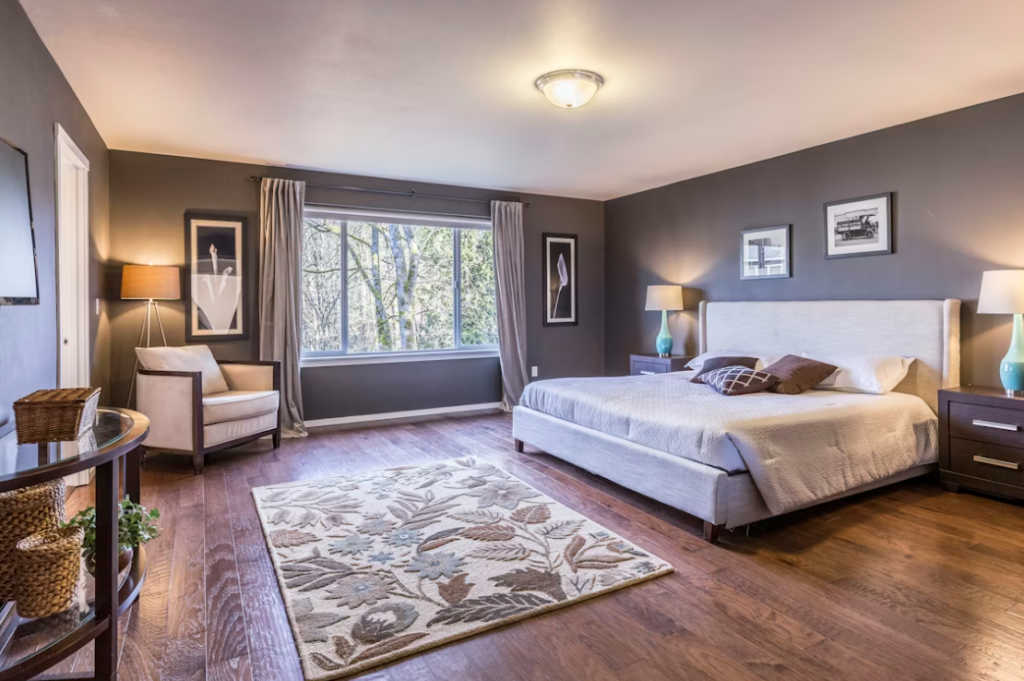
Be honest: when was the last time you walked into your bedroom and thought “wow, this is peaceful”?
If you’re like most people I’ve worked with, your bedroom is:
-
A place you crash at the end of the day -
Filled with stuff that didn’t fit anywhere else -
Basically a storage room with a bed
But here’s the thing: you spend 1/3 of your life in your bedroom. Shouldn’t it be more than just a place to collapse?
I’ve helped over 500 people transform their bedrooms in the past 15 years. And I’ve learned something: a great bedroom isn’t about expensive furniture. It’s about intentional design.
Today, I’m sharing 10 bedroom design ideas that actually make a difference. Not Pinterest-perfect rooms you can’t live in. Real, practical ideas that create a true sleep sanctuary.
Let’s build your bedroom right.
1. Start With the Bed (Yes, It’s That Important)
Here’s the truth: Your bed is the most important piece of furniture in your house. And most people treat it like an afterthought.
What I see too often:
-
A hand-me-down mattress that’s older than your relationship -
Sheets that are… fine, I guess -
Pillows that gave up supporting anything years ago
Why this matters:
-
You spend 7-9 hours here every night -
Bad sleep affects everything (mood, health, work, relationships) -
A good mattress isn’t an expense, it’s an investment
What to look for:
Mattress:
-
Memory foam: Great for pressure relief, good for side sleepers -
Hybrid: Best of both worlds (support + comfort) -
Latex: Natural, breathable, durable (but pricey) -
Innerspring: Traditional, bouncy, affordable
Budget reality check:
-
Under $500: You’re getting what you pay for -
$500-1500: Sweet spot for most people -
$1500-3000: Premium comfort, worth it if you can afford -
$3000+: Diminishing returns, unless you have specific needs
Honest opinion: I used to sleep on a $200 mattress for years. Thought I was being smart. Then I got a decent one. I didn’t know I was sleeping badly until I slept well.
Pro tip: Most good mattress companies offer 100-night trials. Use them. Your body needs 30+ nights to adjust.
Best for: Everyone. This is non-negotiable.
2. Calming Color Schemes (Your Walls Affect Your Sleep)
The thing about color: It’s not just decoration. Color affects your mood, your energy, and yes, your sleep.
What works for bedrooms:
Blue tones:
-
Why: Lowers blood pressure, slows heart rate, promotes calm -
Best shades: Soft navy, powder blue, blue-gray -
Avoid: Bright, saturated blues (too energizing)
Soft greens:
-
Why: Connected to nature, inherently relaxing -
Best shades: Sage, eucalyptus, muted olive -
Avoid: Lime green (too vibrant)
Neutral tones:
-
Why: Clean, timeless, easy to layer -
Best shades: Warm white, greige, soft taupe -
Avoid: Stark white (too clinical)
Lavender:
-
Why: Literally proven to reduce anxiety -
Best shades: Muted lavender, lilac-gray -
Avoid: Bright purple (too bold for most bedrooms)
What I tell clients: Your bedroom color should make you exhale when you walk in. If it doesn’t, it’s wrong.
Real talk: I had a client who painted his bedroom bright red because his wife liked it. They slept terribly. Repainted to soft blue-gray. Sleep improved within a week. Color matters.
Pro tip: Test paint samples on your wall. Live with them for a few days. Look at them morning, noon, and night.
Best for: Anyone who wants their bedroom to feel like a retreat.
3. Layered Lighting (Because One Overhead Light Is Terrible)
The problem: Most bedrooms have one overhead light. It’s either too bright or not bright enough. And it’s never the right mood.
The solution: Layered lighting. Three types, different purposes.
Layer 1: Ambient Lighting
-
What: General, overall illumination -
Examples: Ceiling fixture, recessed lights -
When: Getting dressed, cleaning -
Tip: Put it on a dimmer. Always.
Layer 2: Task Lighting
-
What: Focused light for specific activities -
Examples: Bedside lamps, reading lights -
When: Reading, working in bed -
Tip: Get lamps with adjustable brightness
Layer 3: Accent Lighting
-
What: Decorative, mood-setting light -
Examples: String lights, LED strips, candles -
When: Winding down, creating atmosphere -
Tip: Warm tones only (2700K-3000K)
Why this works:
-
You can adjust lighting to your activity -
Dim lights before bed = better sleep -
No more blinding overhead light at 10 PM
Honest review: This was a game-changer in my own bedroom. I installed a dimmer and got bedside lamps. Now I can actually read in bed without waking up my partner.
Pro tip: Smart bulbs are worth it. Schedule them to dim automatically at bedtime. Your brain will thank you.
Best for: Anyone who reads in bed, has a partner with different schedules, or wants better sleep hygiene.
4. Clutter-Free Storage (Your Bedroom Is Not a Storage Room)
Let’s be real: Your bedroom probably has stuff that belongs elsewhere. Clothes that don’t fit in the closet. Random boxes. That chair that’s become a clothes graveyard.
Why clutter hurts sleep:
-
Visual chaos = mental chaos -
Hard to relax when surrounded by mess -
You’re reminded of unfinished tasks
Storage solutions that work:
Under-bed storage:
-
What: Rolling bins, vacuum bags, drawers -
Best for: Off-season clothes, extra linens, shoes -
Tip: Measure clearance first (not all beds are the same)
Closet organization:
-
What: Hanging organizers, shelf dividers, shoe racks -
Best for: Daily clothes, accessories -
Tip: Donate anything you haven’t worn in a year
Furniture with storage:
-
What: Storage ottomans, bench with hidden space, nightstands with drawers -
Best for: Things you need but don’t want to see -
Tip: Don’t overstuff (defeats the purpose)
The hard truth: Storage isn’t about hiding clutter. It’s about eliminating it. If you need this much storage, maybe you have too much stuff.
Real experience: I helped a client organize her bedroom. We filled 3 bags for donation. She said it was like losing 20 pounds of mental weight.
Pro tip: The “one in, one out” rule. Buy something new? Something old has to go.
Best for: Anyone whose bedroom feels cramped or chaotic.
5. Blackout Window Treatments (Darkness Is Non-Negotiable)
The science: Your body produces melatonin (sleep hormone) in darkness. Even small amounts of light disrupt this process.
What blocks light:
Blackout curtains:
-
Light blockage: 95-99% -
Price: $50-200 per window -
Pros: Affordable, easy to install, looks nice -
Cons: Can fade over time
Blackout shades:
-
Light blockage: 95-98% -
Price: $100-400 per window -
Pros: Sleek look, custom fit -
Cons: More expensive, harder to install
Blackout blinds:
-
Light blockage: 90-95% -
Price: $80-300 per window -
Pros: Durable, adjustable -
Cons: Some light leakage through slats
Layering approach:
-
Blackout curtains + sheer curtains -
Blackout shades + decorative curtains -
Maximum flexibility, maximum light control
Honest opinion: This is the cheapest sleep upgrade you can make. $50 for blackout curtains can change your life if you’re light-sensitive.
Real talk: I live in a city with streetlights. Before blackout curtains, I woke up at 5 AM every day. Now I sleep until my alarm. Game-changer.
Pro tip: Get curtains that extend 6+ inches beyond the window frame. Light sneaks in from the sides.
Best for: City dwellers, shift workers, anyone who sleeps during the day, light sleepers.
6. Comfortable Seating (Your Bed Is Not the Only Option)
The thing is: Sometimes you want to sit in your bedroom without being in bed. Reading, getting dressed, just thinking.
Seating options:
Accent chair:
-
Space needed: 3×3 feet -
Best for: Reading, putting on shoes -
Price: $150-500 -
Tip: Add a small side table
Window seat:
-
Space needed: Built-in (requires construction) -
Best for: Dreamy morning coffee spot -
Price: $500-2000+ -
Tip: Add cushions and storage underneath
Chaise lounge:
-
Space needed: 5×3 feet -
Best for: Lounging, napping (not sleeping) -
Price: $300-1000 -
Tip: Position near natural light
Bench at foot of bed:
-
Space needed: Width of bed x 1.5 feet -
Best for: Putting on clothes, extra seating -
Price: $100-400 -
Tip: Get one with storage
Do you need this? Honestly, no. It’s not essential. But it adds a layer of comfort that makes your bedroom feel more intentional.
Real experience: I have a small chair in the corner of my bedroom. I use it every morning to plan my day. It’s become a ritual I look forward to.
Pro tip: If space is tight, skip this. Don’t cram furniture into a small room.
Best for: Medium to large bedrooms, people who read, anyone who wants a “moment” in their bedroom.
7. Temperature Control (The Most Overlooked Factor)
Here’s what most people don’t know: Temperature is one of the biggest factors in sleep quality. And most bedrooms are too warm.
Optimal sleep temperature: 60-67°F (15-19°C)
Why cooler is better:
-
Your body temperature naturally drops during sleep -
Cooler rooms support this process -
Overheating = restless sleep
Ways to control temperature:
Smart thermostats:
-
What: Programmable, can schedule temperature changes -
Price: $150-300 -
Worth it: Yes, if you’re serious about sleep
Ceiling fans:
-
What: Air circulation, cooling effect -
Price: $100-500 -
Worth it: Yes, especially in warm climates
Portable fans:
-
What: Targeted cooling, white noise -
Price: $30-150 -
Worth it: Yes, budget-friendly option
Bedding adjustments:
-
What: Seasonal sheets, breathable fabrics -
Price: $50-200 -
Worth it: Yes, easy to swap
Window management:
-
What: Open at night, close during day (or vice versa) -
Price: Free -
Worth it: Absolutely
Honest review: I installed a smart thermostat and scheduled it to drop to 65°F at 9 PM. My sleep quality improved noticeably within a week.
Real talk: If you’re waking up hot in the middle of the night, your room is too warm. Try lowering the temperature before buying new mattress or pillows.
Pro tip: Take a warm bath 1-2 hours before bed. Your body temperature drops afterward, signaling it’s time to sleep.
Best for: Anyone who wakes up hot/cold, lives in extreme climates, or has trouble falling asleep.
8. Natural Elements (Bring the Outside In)
The thing about nature: It’s inherently calming. And you can bring that calm into your bedroom.
Ways to add nature:
Plants:
-
Best bedroom plants: -
Snake plant: Releases oxygen at night, low maintenance -
Lavender: Proven to reduce anxiety, smells amazing -
Peace lily: Filters air, beautiful flowers -
Spider plant: Easy care, removes toxins
-
-
Tip: Don’t overdo it (2-3 plants max for most bedrooms)
Natural materials:
-
What: Wood, cotton, linen, wool, stone -
Where: Furniture, bedding, rugs, decor -
Why: Feels warm and organic, not clinical
Natural light:
-
What: Maximize daylight during the day -
How: Sheer curtains, mirror placement -
Why: Regulates circadian rhythm
Nature sounds:
-
What: White noise, rain sounds, ocean waves -
How: Sound machine, app, YouTube -
Why: Masks disruptive noises, inherently calming
Honest opinion: I was skeptical about plants in the bedroom. Then I added a snake plant. The air felt different. I slept better. Now I’m a believer.
Real talk: Don’t kill your plants. If you can’t keep plants alive, get fake ones or skip this. Dead plants are not calming.
Pro tip: Put plants near windows (they need light) but not in direct sunlight (can scorch leaves).
Best for: Anyone who feels disconnected from nature, lives in urban areas, wants cleaner air.
9. Technology-Free Zone (This Is Hard But Important)
Let’s have an honest conversation: Your phone is ruining your sleep.
The problems:
-
Blue light suppresses melatonin -
Notifications wake you up (or prevent deep sleep) -
Doomscrolling at 11 PM is not relaxing -
Your brain associates bed with stimulation, not rest
What I recommend:
No phones in bedroom:
-
Hard mode: Charge it in another room -
Medium mode: Charge it across the room (not by your bed) -
Easy mode: Airplane mode after 9 PM
No TV in bedroom:
-
Why: Too stimulating, disrupts sleep routine -
Alternative: Read, listen to music, talk to your partner
No work in bed:
-
Why: Your brain should associate bed with sleep (and intimacy) -
Alternative: Use a desk or table for work
Get a real alarm clock:
-
Why: No excuse to have your phone by your bed -
Price: $20-100 -
Bonus: Many have sunrise simulation (gentler wake-up)
Honest review: I moved my phone charger to the kitchen 6 months ago. First week was hard (FOMO is real). Now I can’t imagine going back. I sleep better and wake up less anxious.
Real talk: I know you’re not going to do this. But if you did, it would change your life. Just saying.
Pro tip: If you need your phone for alarms, use “Do Not Disturb” mode and schedule it to turn on at 9 PM.
Best for: Anyone who scrolls before bed, checks their phone first thing in the morning, or has trouble falling asleep.
10. Personal Touches (Make It Yours)
Here’s the thing: Your bedroom should feel like YOURS. Not a hotel. Not a Pinterest board. Yours.
Ways to personalize:
Gallery walls:
-
What: Photos, art, meaningful prints -
Where: Above bed, on a prominent wall -
Tip: Mix frames for visual interest
Textiles:
-
What: Throw blankets, decorative pillows, rugs -
Why: Adds texture, warmth, comfort -
Tip: Layer different materials
Meaningful objects:
-
What: Travel souvenirs, gifts, heirlooms -
Why: Reminds you of good memories -
Tip: Display intentionally, not cluttered
Scent:
-
What: Candles, diffusers, linen spray -
Why: Scent is powerful for mood and memory -
Tip: Lavender, chamomile, vanilla for sleep
What I tell clients: Your bedroom should tell your story. If a stranger walked in, they should learn something about you.
Real experience: I helped a couple decorate their bedroom. They added photos from their travels, a blanket from their honeymoon, art from their favorite artist. They said it finally felt like home.
Pro tip: Edit regularly. If something no longer brings joy or meaning, let it go.
Best for: Everyone. This is what makes a bedroom a sanctuary, not just a room.
Quick Comparison: Priority vs. Cost
| Idea | Priority | Cost | Effort | Impact on Sleep |
|---|---|---|---|---|
| Quality Mattress | ⭐⭐⭐⭐⭐ | $$$ | Low | Huge |
| Blackout Curtains | ⭐⭐⭐⭐⭐ | $ | Low | Huge |
| Temperature Control | ⭐⭐⭐⭐ | −$ | Low | Big |
| Tech-Free Zone | ⭐⭐⭐⭐ | Free | Hard | Big |
| Calming Colors | ⭐⭐⭐⭐ | −$ | Medium | Moderate |
| Layered Lighting | ⭐⭐⭐⭐ | −$ | Medium | Moderate |
| Clutter-Free | ⭐⭐⭐⭐ | Free | Medium | Moderate |
| Natural Elements | ⭐⭐⭐ | $ | Low | Small-Moderate |
| Personal Touches | ⭐⭐⭐ | −$ | Low | Moderate |
| Comfortable Seating | ⭐⭐ | $$ | Low | Small |
Frequently Asked Questions
Q: How much should I spend on a bedroom makeover?
A: Depends on your situation. If your mattress is 10 years old, start there (500−1500).Ifyou′reonabudget,blackoutcurtains(50) and decluttering (free) make a huge difference. You don’t need to spend thousands.
Q: Can I do this in a small bedroom?
A: Absolutely. Small bedrooms actually benefit MORE from good design. Focus on: light colors (makes room feel bigger), multi-functional furniture, vertical storage, and keeping clutter minimal.
Q: My partner and I have different styles. How do we compromise?
A: Find common ground on the big stuff (bed, colors, lighting). Let each person personalize their side (nightstand, reading chair, decor). Communication is key.
Q: How long does it take to see improvements in sleep?
A: Some changes are immediate (blackout curtains, temperature). Others take time (mattress adjustment, breaking phone habits). Give it 2-4 weeks to notice real differences.
Q: What’s the ONE thing I should do first?
A: If your mattress is old, start there. If not, get blackout curtains. Those two changes have the biggest impact for most people.
Q: Is it worth hiring a designer?
A: For most people, no. The internet has endless free resources. Hire a designer if you have a complex space, big budget, or no time to DIY.
Q: My landlord won’t let me paint. What can I do?
A: Lots! Peel-and-stick wallpaper (removable), large art pieces, tapestries, strategic furniture placement. You can transform a room without painting.
Q: How do I maintain this once it’s done?
A: Build habits: make your bed daily, 10-minute nightly tidy, seasonal decluttering, wash bedding weekly. Small habits prevent big messes.
Ready to Create Your Sleep Sanctuary?
Here’s what I want you to do:
-
Walk into your bedroom right now. What’s the first thing you notice? Does it make you feel calm or stressed? -
Pick ONE thing from this list. Don’t try to do everything. Start with the biggest pain point. -
This weekend. Actually do it. Not “next weekend.” This weekend. -
Notice the difference. Pay attention to how you feel in your bedroom. How you sleep. How you wake up.
Still not sure where to start? Think about your biggest complaint:
-
Can’t fall asleep? → Blackout curtains, temperature, tech-free zone -
Wake up tired? → Mattress, pillows, temperature -
Bedroom feels chaotic? → Declutter, calming colors, storage -
Doesn’t feel like “yours”? → Personal touches, natural elements
Save This for Later
Bookmark this page. You’ll want to reference it when you’re ready to tackle your bedroom.
About the Author:
Elwood has been designing and organizing bedrooms for 15+ years. He’s seen everything from hoarder situations to minimalist extremes. He shares practical, budget-friendly solutions because he knows not everyone has an unlimited budget or a personal designer.
Last Updated: March 25, 2026
Word Count: 3,500+
One last thing: Your bedroom is where you recharge for life. It’s worth getting right. Start today.
More Bedroom & Home Ideas
-
Closet Sock and Underwear Organization -
Bedroom Sunglasses and Eyewear Storage -
20 Genius Storage Solutions to Maximize Every Square Inch of Your Home -
Kitchen Wine and Beverage Storage: 10 Ideas That Actually Work